Surprising Facts About Portofino
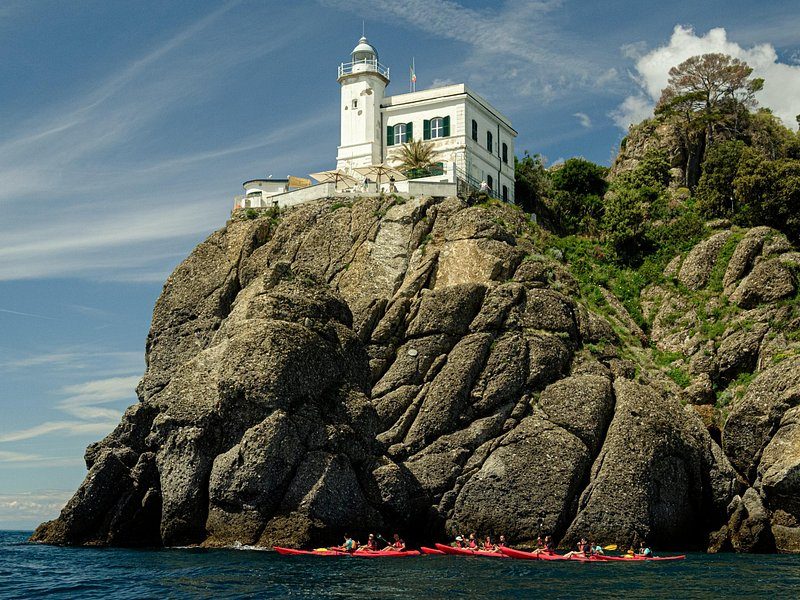
The short answer. Portofino is a village of a few hundred people with a Roman name, a church rebuilt four times, a castle with two pines planted for a wedding and a bronze figure on the seabed. Here are the facts that surprise people most, and what each one means on a Portofino tour.
A name, a sale and a handful of people
- Its Roman name means the dolphin's port. Pliny the Elder wrote of Portus Delphini on this coast, between Genoa and the Gulf of Tigullio. When you step off the ferry, you land in the port Pliny named.
- It once belonged to an abbey. A charter of 986 by Adelaide of Italy gave the village to the abbey at San Fruttuoso, in the next bay.
- It was sold to Florence. In 1409 Charles VI of France, then ruling Genoa, sold Portofino to the Republic of Florence. When Charles lost Genoa, the Florentines gave it back.
- About 379 people live here. That was the count at the end of 2021.
The church and the castle
- San Giorgio has been rebuilt four times. The church on the cliff was first built in 1154. War destroyed it four times, and each time the village built it again.
- Saint George's relics came home with sailors. Portofino's sailors brought them back from the Holy Land. They lie under the high altar. When you visit, look in the sacristy for the sailors' ex-votos.
- A bonfire marks the saint's day. Saint George is the patron saint, and the village lights a bonfire on 23 April.
- The castle's pines were a wedding present. Castello Brown takes its name from Montague Yeats Brown, the British consul in Genoa, who owned it from 1867 to 1905. The two pines on the terrace were planted for the owner's wedding in 1870. You can stand under them today.
- The village has owned the castle since 1961. The comune bought it that year, and sells its ticket, €10, only at the gate.
Both sit above the harbour, and both are on things to do in Portofino. The church is free in daylight; the castle keeps its own hours.
A novel, a film and a copy in Florida
- A novel made it fashionable. Elizabeth von Arnim wrote The Enchanted April (1922) after a stay at the castle. The book is credited with drawing English visitors.
- The film came back to the castle. The 1991 film of the novel was shot at the castle, and it was nominated for three Oscars.
- There is a full-size copy of the harbour in Orlando. A replica of Portofino Bay opened at Universal Orlando Resort in September 1999. If you have been there, you have seen the copy before the real thing.
- Portmeirion was not a copy. The Welsh village is often said to be modelled on Portofino. Its architect denied it, while admitting to having "fallen for Portofino".
The statue on the seabed
- The Christ of the Abyss stands 17 metres down. The bronze, 2.5 metres tall, was placed in the bay of San Fruttuoso in August 1954. It stands near where Dario Gonzatti, the first Italian to use scuba gear, died in 1947. You would have to dive to reach it.
- It lost a hand, probably to an anchor. The statue was lifted in 2003 to clean it of corrosion. A detached hand was replaced, and it went back with a new base in 2004.
- It has two bronze twins. Casts from the same mould stand in Grenada, since 1961, and off Key Largo in Florida, since 1965.
The promontory itself
- The park dates from 1935. The promontory has been protected since 1935, and its paths run for about 80 km. You can start several of them from the village.
- Mills once lined the valleys. Some 36 of them once worked the eastern side; the Mulino del Gassetta is restored and sits on the path from Santa Margherita.
- Anchors are banned over the seagrass. Boats may not anchor over the Posidonia meadow along much of the coast.
Kings, a pope and a song
- Richard the Lionheart stayed here. The English king is recorded in Portofino in 1190.
- So did a pope. Pope Gregory XI came in 1377. Later residents included Guy de Maupassant and Guglielmo Marconi, the pioneer of radio.
- A 1959 hit carried its name. Dalida sang "Love in Portofino" in French and Italian. Andrea Bocelli recorded it in 2013.
- The statue's clay original was lost. It turned up in a foundry in 1993, without its arms. It is now in a museum of underwater activity in Ravenna.
- The abbey was a gift. Frank and Orietta Pogson Doria Pamphilj gave it to the FAI in 1983. The FAI restored its spring in 2017.
Most of this costs nothing to see. The church, the Piazzetta and the harbour are free at any hour; only the castle and the abbey charge. How to fit them into one day is set out in how to visit Portofino.
| Year | What happened |
|---|---|
| 986 | The village is given to the abbey in the next bay |
| 1154 | The church on the cliff is first built |
| 1409 | Sold to Florence, then handed back |
| 1870 | Two pines planted for a wedding |
| 1935 | The promontory becomes a protected park |
| 1954 | The bronze statue goes into the sea |
| 1961 | The comune buys the castle |
What to take from all this
- Climb to the church. It is free, and the relics and the sailors' ex-votos are inside.
- Budget for the castle. €10 at the gate buys the terrace with the two pines.
- Look down in the bay. The boats that call at San Fruttuoso cross the water above the statue.
- Come in late April. The bonfire for Saint George burns on 23 April.
If the history is what draws you, walk it with a guide, or see the coast by boat. The walks are on Portofino Italy walking tour; the season is on the best time to visit.
Days with the story told
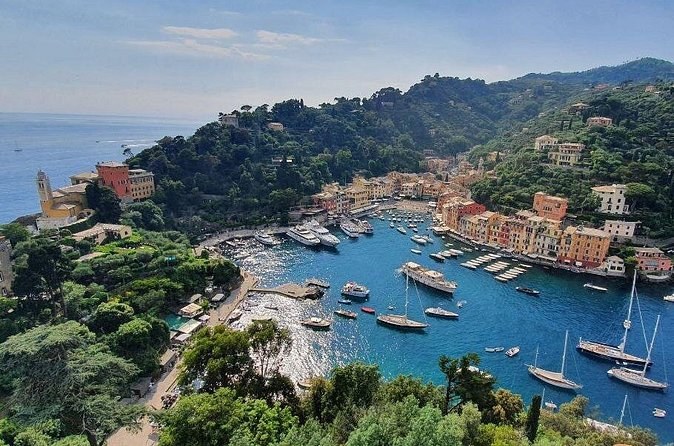
Portofino and Santa Margherita Private Tour of Ligurian Gems
A private local guide for Portofino and Santa Margherita, about three hours in each, joined by the public ferry, with focaccia and a glass of wine. Cruise passengers are met at the tender pier.
From $405 per person, bookings of two
Check Availability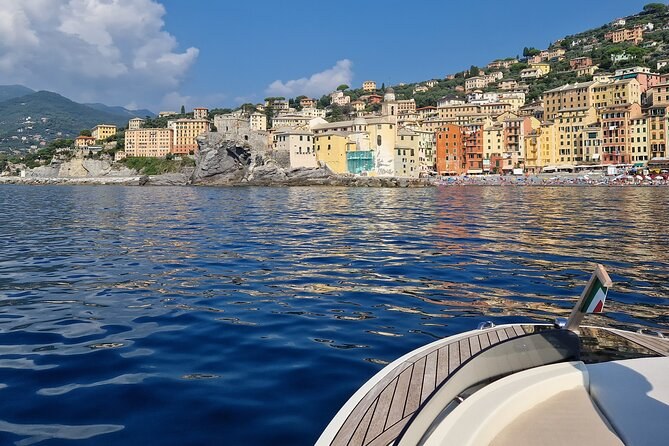
Private Boat Tour in Portofino on board GreenBoat
Three hours on a traditional Ligurian boat of your own, round the promontory past San Fruttuoso and Camogli, with stops agreed with the skipper. Snorkel gear on board.
From $1,378 per group (up to 6)
Check Availability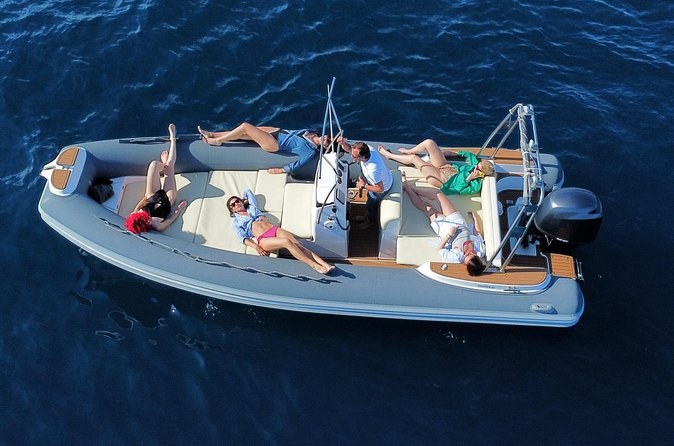
Daily and Sunset Nightly tour boat from Genoa to Portofino
A full day on your own boat from Genoa's old harbour: about an hour and a half ashore each at San Fruttuoso, Portofino and Camogli, with two swim stops.
From $1,276 per group (up to 7)
Check AvailabilityNext: Pick the story you want to see, on foot in the village or from the sea. Every fare sits side by side on Portofino Tours.